Spray Painting Cost: What UK Commercial Property Owners Need to Know
If you've started requesting quotes for a commercial spray painting project and found yourself looking at figures that seem wildly inconsistent, you're not alone. Spray Painting Cost in the UK varies considerably depending on factors that aren't always explained clearly in a proposal — surface area, substrate condition, access requirements, and the finish specification all pull the final figure in different directions.
This guide breaks down exactly what drives those differences, what a well-structured quote should cover, and how to tell whether you're comparing like-for-like when multiple contractors are on your shortlist.
At Commercial Painting Company, we've completed 300+ commercial projects across the UK over 8 years in the trade, rated 4.9 out of 5 from 250 reviews. That experience shapes every observation in this article.
What Actually Drives Spray Painting Cost?
The single biggest variable in any commercial spray painting project isn't the paint — it's the condition of the substrate and the complexity of getting to it safely.
Contractors pricing a job are essentially calculating four things: how much surface area needs treating, how long preparation will take, how difficult the access is, and what finish specification the client needs. Any of those four can double a quote compared to a simpler job of identical square footage.
Here's how each factor plays out in practice:
Surface area and substrate type form the baseline. A smooth steel cladding panel and a heavily textured block wall might share the same square footage but require entirely different application approaches, different primers, and different product volumes. Spray equipment settings also vary significantly between substrates.
Preparation work is the most underestimated cost in any coating project. Surfaces that are contaminated, corroded, previously coated with incompatible products, or structurally compromised require stripping, treating, priming, or repair before a topcoat can go down. A contractor who quotes low by skipping this stage is setting up a premature coating failure — typically within two to three years rather than the fifteen to twenty years a properly prepared surface delivers.
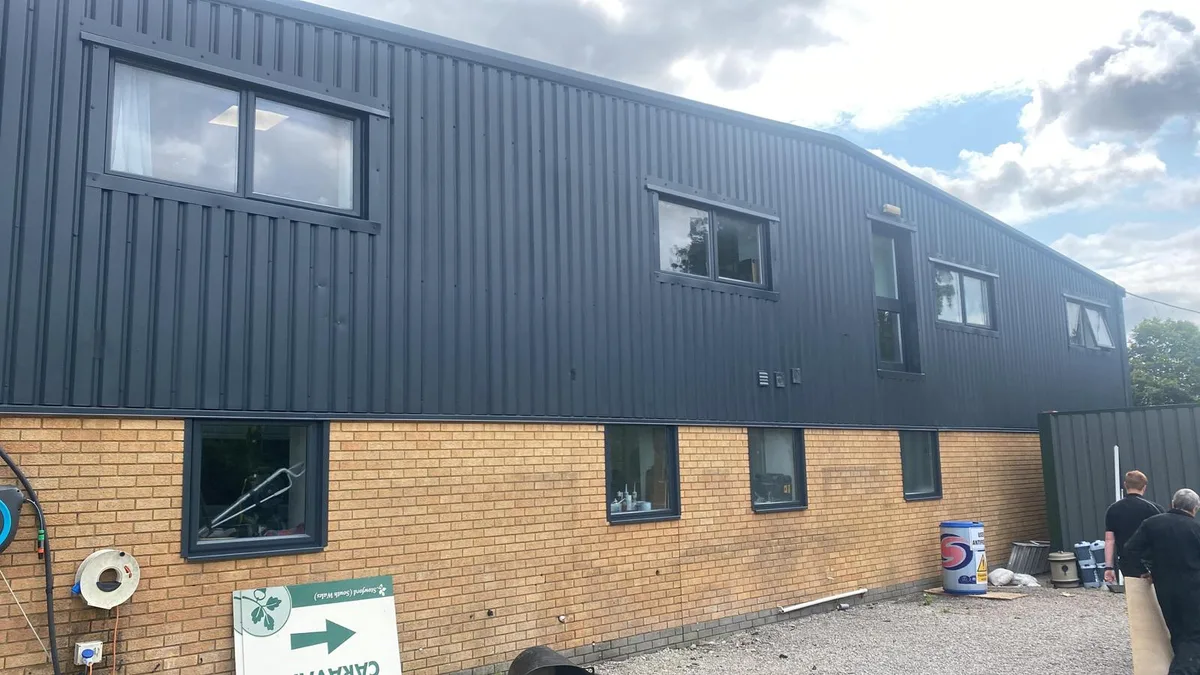
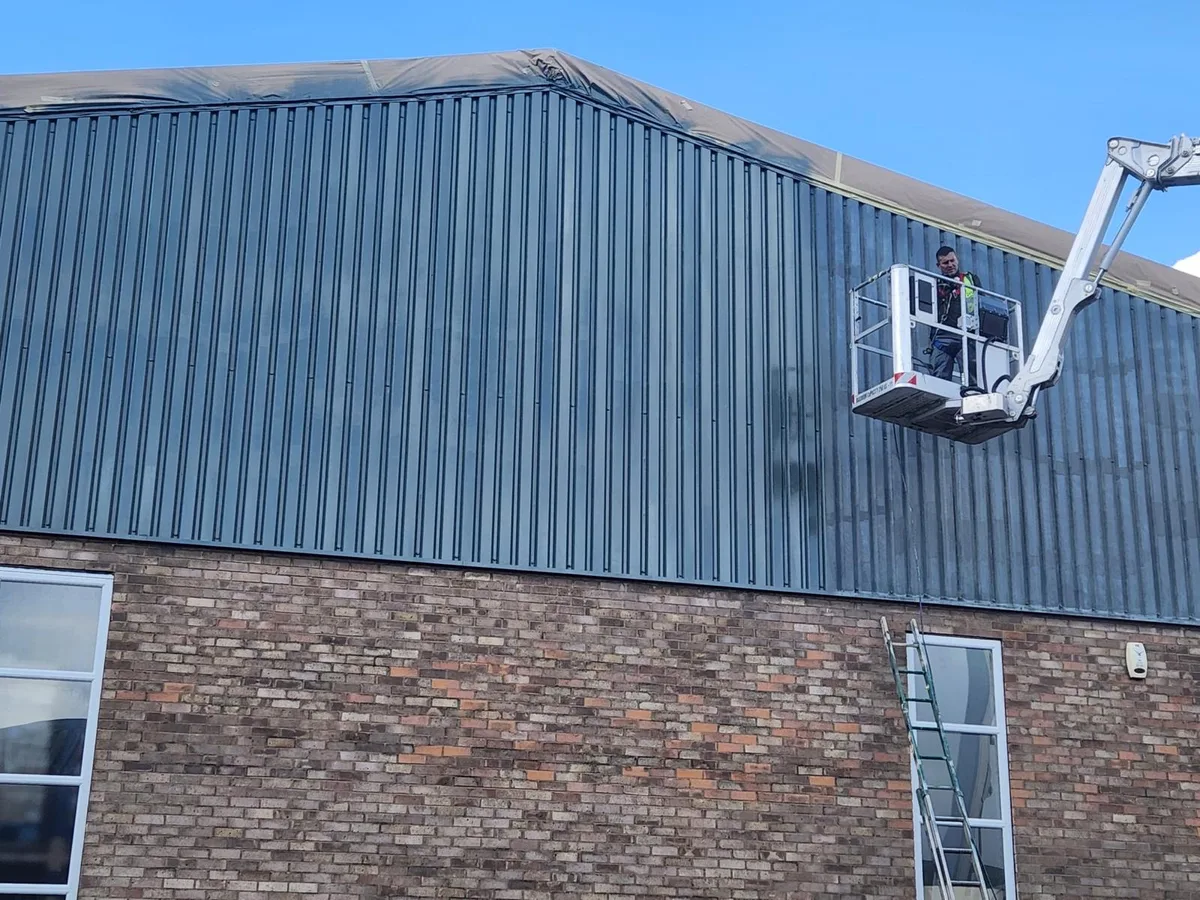
Access and working height have a significant impact on cost and programme. A ground-floor shopfront is straightforward. A multi-storey warehouse exterior, a cladding system at height, or a roof-mounted plant room introduces scaffolding, MEWP hire, or specialist access planning. IPAF and PASMA-certified operatives are required for powered platform and scaffold work — something any credible commercial contractor should be able to demonstrate.
Finish specification affects both product cost and application time. A single-coat maintenance finish over a sound existing coating sits at one end of the spectrum. A full system — primer, mid-coat, and topcoat — with a high-durability polyurethane or fluoropolymer finish sits at the other. The latter delivers better protection and longevity but costs more upfront. The right choice depends on the property's exposure conditions and how long the client wants the finish to last.
The Spray Painting Cost Breakdown: How a Good Quote Is Structured
A professional commercial spray painting quote should be transparent about what's included, not just a lump sum with a total at the bottom.
When reviewing proposals, look for the following line items or at least explanations covering:
- Preparation work — what's being done to the substrate before any coating is applied, and whether this is included or quoted separately
- Primer specification — the product being used, its purpose (corrosion inhibition, adhesion promotion, sealing), and the number of coats
- Topcoat specification, the product name, manufacturer, colour reference, and number of coats
- Access method, whether scaffolding, mobile elevated platforms, or rope access is included, and who is responsible for erecting and striking it
- Waste disposal, particularly relevant for industrial sites where solvent-based materials generate hazardous waste
- Warranty terms, specifically, what the coating manufacturer's warranty covers and for how long
Our work at Commercial Painting Company is backed by a 20 years coating warranty on qualifying systems, and we carry £10M public liability insurance on every project. Both details should be on any proposal you receive from a commercial contractor.
Specialist vs General Contractor: Understanding the Difference
One of the most common mistakes in commercial procurement is treating spray painting as a commodity service where any decorator with a spray gun will do equivalent work. The gap between a specialist commercial spray painting contractor and a general painter using spray equipment is significant.
| Specialist Contractor | General Contractor | |
|---|---|---|
| Equipment Quality | Industrial-grade airless and HVLP rigs, maintained and calibrated | Consumer or light-trade equipment, variable output consistency |
| Crew Expertise | Trained spray operatives with substrate-specific experience | General decorators cross-trained on spray; depth varies |
| Project Management | Dedicated site manager, programme management, H&S documentation | Often owner-managed; documentation may be minimal |
| Timeline Reliability | Planned programme with contingency for weather and drying windows | Schedule more susceptible to competing jobs and reactive delays |
| Aftercare Support | Structured defect period, warranty-backed remediation process | Varies significantly by individual contractor |
| Typical Clients | Facilities managers, commercial developers, site managers, property managers | Homeowners, small retail, incidental commercial work |
For industrial painting on warehouses, factories, and large commercial units, a specialist contractor carries the right equipment, the right insurance, and the right site management disciplines. Our industrial painting service and cladding painting service are both configured for exactly this kind of brief.
How Property Type Affects the Quote
Different commercial property types introduce different cost considerations, and understanding them helps you evaluate what you're being quoted for.
Warehouses and industrial units typically involve large surface areas of steel cladding, roof sheets, and internal steelwork. Access to roof lines and high-level walls drives up the programme length. Corrosion remediation on older steel panels can add substantial preparation time. Our warehouse coating service covers the full range of these scenarios.
Retail units and shopfronts often involve smaller areas but more complex masking, working around trading hours, and coordinating with neighbouring tenants. Speed of return to use is frequently a client priority, which affects product selection (faster-drying systems cost more).
Offices and commercial buildings vary enormously in age and substrate. Modern curtain-walling and composite cladding require different systems to 1960s or 1970s concrete frames, which may need specialist primers and anti-carbonation coatings before a decorative finish can go down.
Healthcare buildings, schools, and educational facilities introduce specific requirements around working hours, low-odour products, and sometimes enhanced health and safety documentation. These requirements aren't deal-breakers but they're line items that a specialist contractor builds into the programme.
What Increases Spray Painting Cost Beyond the Baseline
Some project characteristics push costs above what a standard baseline quote would suggest. Being aware of these upfront saves time during the quoting process.
- Previous coating failure, if existing paint is peeling, flaking, or delaminating, it needs mechanical removal before recoating. This is time-intensive.
- Lead paint, present in many pre-1970s commercial buildings. Safe removal and disposal requires specialist procedures and adds cost.
- Complex geometry, curved facades, intricate cladding profiles, and areas with dense service penetrations are slower to spray and mask.
- Colour change, moving from a dark to a light colour (or vice versa) typically requires an additional mid-coat to achieve opacity.
- Tight programme, if a project needs to be completed in fewer days than a standard programme allows, additional crew resource increases the daily rate.
- Remote or restricted sites, delivery logistics, limited parking for contractor vehicles, and site security requirements all have minor but real cost implications.
How to Read a Spray Painting Cost Quote Properly
Comparing quotes isn't just about the bottom line. Two proposals for the same job can differ significantly in what they actually include, and choosing the cheaper number without reading the scope can result in substantial additional costs mid-project.
Work through these questions when reviewing any proposal:
Is preparation itemised? If a quote references only "preparation" without specifying what that means for your substrate, ask for clarification. The answer tells you a lot about the contractor's attention to detail.
What products are specified? A named product from a recognised manufacturer (with a colour reference and coat count) is checkable. A vague description like "suitable primer and topcoat" is not.
What does the warranty actually cover? Contractor workmanship warranties and manufacturer coating warranties are different things. You want both, and you want them documented.
Is access included? Scaffolding and MEWP hire are sometimes quoted separately by subcontractors. If access isn't clearly in scope, ask.
What are the payment terms? Stage payments tied to programme milestones are standard on larger projects. A contractor demanding full payment upfront is unusual and worth querying.
CHAS and Constructionline accreditations are useful indicators that a contractor meets procurement baseline requirements, both indicate the contractor has been independently assessed against health, safety, and business standards relevant to commercial work.
Frequently Asked Questions
How is Spray Painting Cost calculated for a commercial property?
Spray Painting Cost is calculated based on the total surface area to be treated, the substrate type and condition, the coating system specified, the access method required, and any preparation work needed before coating. Each factor adds or removes time and materials from the project, which is why quotes vary, and why a site assessment before quoting produces more accurate figures than a ballpark based on square footage alone.
Why do spray painting quotes vary so much between contractors?
Variation usually comes from differences in what's included in scope. One contractor may include full preparation, priming, two topcoats, and scaffold erection. Another may quote only the topcoat application, with preparation and access as extras. Always compare on a like-for-like basis by asking each contractor to confirm what their price includes against the same specification.
Do you work on properties near the West Midlands?
Yes, Commercial Painting Company works across a wide area of the UK. We cover commercial properties in Blackheath, Brierley Hill, Kingswinford, Rowley Regis, Wednesbury, and Darlaston, among other locations. Get in touch to confirm coverage for your specific site.
What types of commercial property do you work on?
We work across the full range of commercial property types, warehouses, factories, industrial units, retail units, offices, healthcare buildings, schools, hospitality venues, showrooms, and vehicle bays. Each property type introduces its own substrate and access considerations, which we assess during the site visit.
How long does a commercial spray painting project take?
Programme length depends on the surface area, the coating system, drying times between coats, and access complexity. Smaller retail units may take a day or two. Larger warehouse exteriors or multi-elevation commercial buildings typically require a structured programme of one to three weeks. We provide a detailed programme alongside every written quote.
What to Do If You're Ready to Get a Proper Quote
Understanding Spray Painting Cost at a conceptual level is useful, but the only number that matters for your specific project is the one produced after a contractor has assessed your site, understood your brief, and specified the right system for your substrate.
Commercial Painting Company provides written quotes following a free site visit, backed by 8 years of experience, CHAS and Constructionline accreditation, £10M public liability insurance, a 20 years coating warranty on qualifying systems, and a 4.9★ rating from 250 reviews. You can find out more about who we are on the about page or go directly to the Commercial Painting Company homepage.
If you're ready to arrange an assessment, book a free site visit and we'll come to your property, review the substrate, and produce a clear, itemised proposal. If you'd prefer to talk through the brief before committing to a visit, you're welcome to book a 15-minute consultation instead, no obligation, just a conversation.